
The Never Stop Learning Series

About 100 Great Books

A hand-picked tour through centuries of writing, curated to inspire lifelong learning.
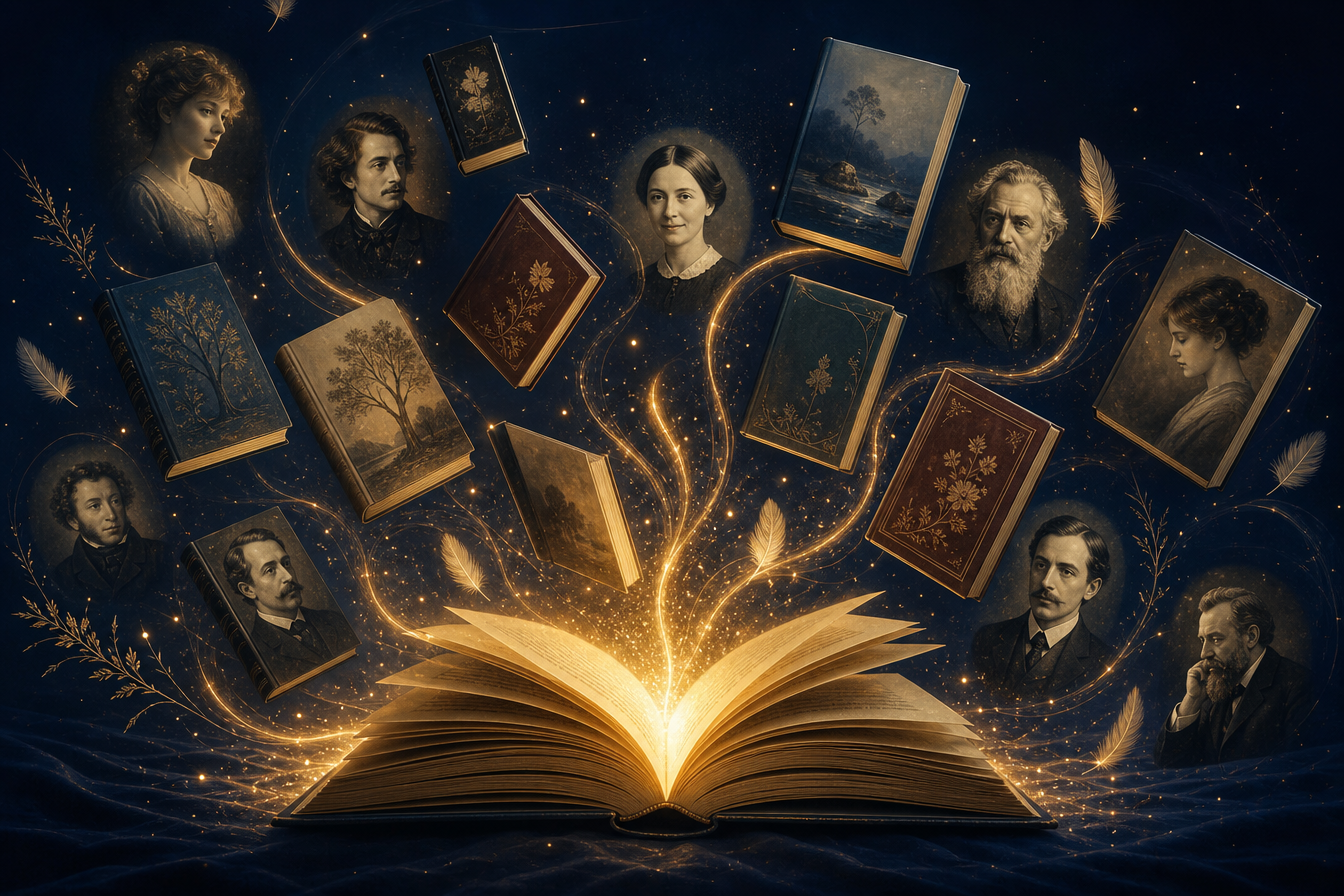
Over the last several years, this collection grew out of a simple desire to keep learning and to share that learning with friends and family. It now sits alongside an Art Primer, a tool for learning Spanish, and the 500 Famous Historical Persons that power Pocket Quotes.


The 100 Selected and Well-Known Literary Works is a hand-picked tour through centuries of writing - from The Tale of Genji and The Odyssey to Beloved, The Alchemist, and Normal People. For each work we've gathered the same eleven fields so you can compare, contrast, and follow your curiosity:

  • The author
  • Year written
  • Genre
  • Main theme
  • Setting
  • The author's message
  • A famous quote from the piece
  • Key award or status
  • Reading difficulty
  • Approximate page count
  • A link to inspirational quotes by the author

Below we will use the montage above to highlight a small selection of pieces from the list and a few points on authors. We are hopeful this will instill some desire to learn more about the book in the montage or from the full list of 100 found in:

PocketQuotes.lovable.app/literary-works

This compelling visual shown in the montage of books and authors above, captures the luminous power of foundational storytelling. The centerpiece is a single, radiant, open book—a symbol of the illuminating nature of knowledge itself—from which a selection of literature's most iconic covers and figures dramatically emerges. This brilliant glowing light serves as the launchpad for a deeper exploration of the "100 Great Literary Works" curated on the PocketQuotes.lovable.app/literary-works platform.

As you begin your journey through these one hundred masterpieces, use this stunning montage as a guide to the kind of transformative experiences that await. A casual reader, or a dedicated scholar, may want to investigate this list and the featured works for several key reasons:

To Traverse Worlds and Empires

Look first to the left, where the imposing fluke of a whale crests above the dark, inky blue title, "MOBY-DICK." One investigates Herman Melville's 1851 epic not just for the exhilarating pursuit of the elusive sperm whale, but to grapple with the deep and troubling psychological depths of obsession and the human spirit's battle against nature's absolute power. This is a quest for meaning amidst chaos, a foundational work that demands confrontation.

To investigate these pieces is also to reclaim the very roots of storytelling. Witness the simple, powerful iconography of a square-rigged galley on "THE ODYSSEY." This ancient epic, attributed to Homer, isn't just a fantasy adventure; it is the ultimate narrative of home, identity, and resilience, foundational to all Western literature. To know The Odyssey is to understand how we frame our own life's challenges and triumphs.

To Master the Nuances of Human Connection

The image beautifully balances epic scope with intimate portraiture. Observe the delicate, classic silhouette of the woman on "PRIDE AND PREJUDICE" and the distinctive, melancholy portrait of EDGAR ALLAN POE to the right.

One should investigate Jane Austen because, in 1813, she perfected the art of observing human social dynamics, wit, and romantic misunderstanding. Pride and Prejudice remains famous because it offers an intricate dance of social manners that is still utterly relatable today; it is a masterclass in reading character and navigating expectation.

Likewise, one must investigate Poe—the master of the macabre, whose portrait hovers as a solemn gatekeeper because he defined genres (the detective story, gothic horror) and explored the dark, fractured landscape of the human psyche that was previously uncharted. To read Poe is to confront the shadows we often try to ignore.

To Witness the Triumph of Imagination and Truth

This luminous introduction visually connects the past and the future. From the classic imagery of "THE GREAT GATSBY" (where the lonely figure of Gatsby observes the glittering New York skyline, capturing the glamour and moral rot of the Jazz Age) and "TO KILL A MOCKINGBIRD" (where the silhouetted bird in the tree symbolizes the loss of innocence in the face of deep injustice), we can trace a powerful thread to the visual intensity of "1984."

Why investigate George Orwell's 1984, which dominates with the looming, unblinking Eye that defines Big Brother? Because, despite being written in 1949, its warning about total surveillance, the manipulation of language, and the erosion of individual freedom has grown more pressing, not less. One reads 1984 to understand power and the crucial importance of a free mind.

And finally, see "FRANKENSTEIN" (with Mary Shelley's creature, illuminated by the very lightning that gave him life), paired visually with "DON QUIXOTE" (Cervantes' knight, seen charging a windmill). Here, this montage presents the core dilemma: are we, like Victor Frankenstein, monsters of our own ambition, or are we, like Quixote, noble dreamers, "charging at windmills" to uphold our ideals, no matter how delusional?

The 100 works found on PocketQuotes.lovable.app/literary-works offer a century of answers to these fundamental questions. This visual introduction is just the gateway. "EXPLORE. LEARN. BE INSPIRED." Open these books, and see what light these timeless stories and authors will cast upon your world.


The Quiz Compendium

Paired with the collection is a Master Quiz Compendium of ten quizzes, twenty questions each — two hundred chances to reinforce what you've read. Every question asks you to spot the INCORRECT statement among four options about a work's author, theme, or setting. Each quiz comes with a full answer guide explaining why the wrong answer is wrong — because learning is more important than getting it right the first time.

Why keep learning?

Continued, lifelong learning has measurable benefits — for memory, well-being, and curiosity itself. These pages are an invitation: pick a book that intrigues you, read a few pages, take a quiz, and discover an author whose voice you'd never met.