
Celebrating America's Semiquincentennial
Honoring a Legacy of American Exceptionalism · 1776 – 2026
A tool to expand your knowledge of our country's history since its birth — prepared by Mike Walden, Queenstown, MD, with the utmost respect for the USA.
What's inside
America 250 is an interactive educational framework engineered to commemorate the 250th anniversary of the founding of the United States. Rather than static, passive memorization, this is a dynamic learning landscape — encouraging students, history enthusiasts, and citizens to critically analyze the cultural values, institutional bedrocks, and scientific triumphs that have propelled the American experiment forward for a quarter-millennium.
- The Master Chronological Journey: a comprehensive, row-by-row dataset spanning 1776 to 2026. Each year is mapped across historical milestones, key literary works, authors, literary themes, famous births, inventions, presidencies, iconic people, historic events, and cultural icons.
- The Active-Learning Quiz Framework: ten distinct quizzes broken into 25-year epochs, plus a 50-state bonus quiz. Each question uses the "Spot the Flaw" technique — three statements are true, one is wrong — training learners to verify and cross-reference rather than guess.
American Exceptionalism on Display
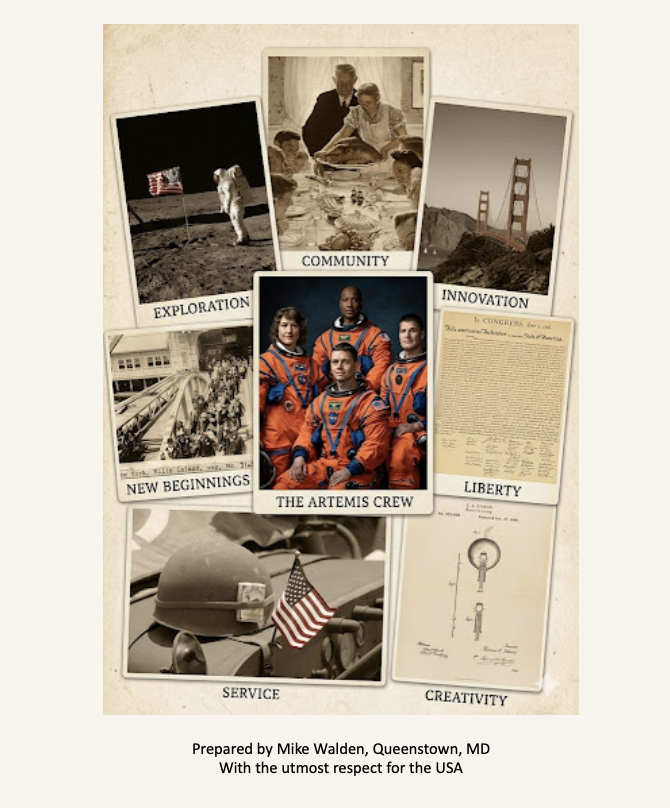
American exceptionalism is defined not just by major historical events, but by a distinct set of cultural values, institutional bedrocks, and an unyielding drive toward the future. Each of the eight images below captures one pillar of that 250-year journey.
An Apollo astronaut stands beside the American flag on the lunar surface.
This captures the ultimate expansion of the American frontier. Driven by competitive determination and unmatched industrial execution, the United States turned an existential Cold War crisis into humanity's greatest leap. It symbolizes a nation that refuses to accept the boundaries of the terrestrial world, continually pushing into the great unknown.
A multigenerational family gathered around a dinner table, smiling as a large roasted turkey is served (inspired by Norman Rockwell's iconic Freedom from Want).
At the heart of the American experiment is the domestic sanctuary and the preservation of core community values. It highlights a culture of abundance, gratitude, and familial continuity. It stands for the quiet, foundational freedoms that protect individual households and allow diverse communities across the nation to thrive together in peace.
A breathtaking perspective of the Golden Gate Bridge cutting through the coastal fog.
This represents the sheer scale of American civil engineering and infrastructure. Built during an era of profound economic hardship, it serves as a monument to overcoming seemingly impossible environmental and technical odds. It reflects a national spirit that constructs literal and figurative bridges to connect people, commerce, and ideas.
A historic, sepia-toned crowd of immigrants disembarking a ferry onto Ellis Island, looking toward their new home.
America's exceptional identity is fundamentally tied to being a beacon for those seeking a fresh start. Unlike traditional nations defined strictly by shared bloodlines or ancient geography, the U.S. built an identity on a shared creed of liberty. This image honors the millions who left everything behind to contribute to the ever-evolving American tapestry.
The multi-ethnic, co-ed crew of the Artemis mission posing proudly in their bright orange flight suits.
Serving as the central anchor of the montage, this modern portrait bridges past triumphs with future milestones. As the U.S. prepares its next lunar footprint heading toward 2026 and beyond, this crew reflects a mature American exceptionalism—one that utilizes the full spectrum of our diverse talents to maintain global leadership in technology and space colonization.
The aged, handwritten script of the 1776 Declaration of Independence.
The absolute bedrock of the nation. This document introduced a revolutionary philosophy to the world: that governments derive their just powers solely from the consent of the governed, and that all individuals possess inalienable rights to life, liberty, and the pursuit of happiness. It is the moral standard that the country has continually fought to fulfill over its 250-year history.
A rugged, battle-worn military helmet sitting atop a vehicle, accompanied by a small American flag.
A poignant tribute to the price of freedom. American liberty has survived because citizens have consistently volunteered to answer the call of duty. This image represents the generations of service members who sacrificed their comfort, safety, and lives to protect the constitutional republic at home and defend freedom abroad.
The official United States patent office blueprint for Thomas Edison's electric light bulb.
This celebrates the spirit of American ingenuity and entrepreneurship. Backed by a constitutional system that uniquely protects intellectual property rights, inventors like Edison transformed global society. It highlights a nation that does not just adapt to the dark, but builds the infrastructure to illuminate the world.
The Original Thirteen Colonies
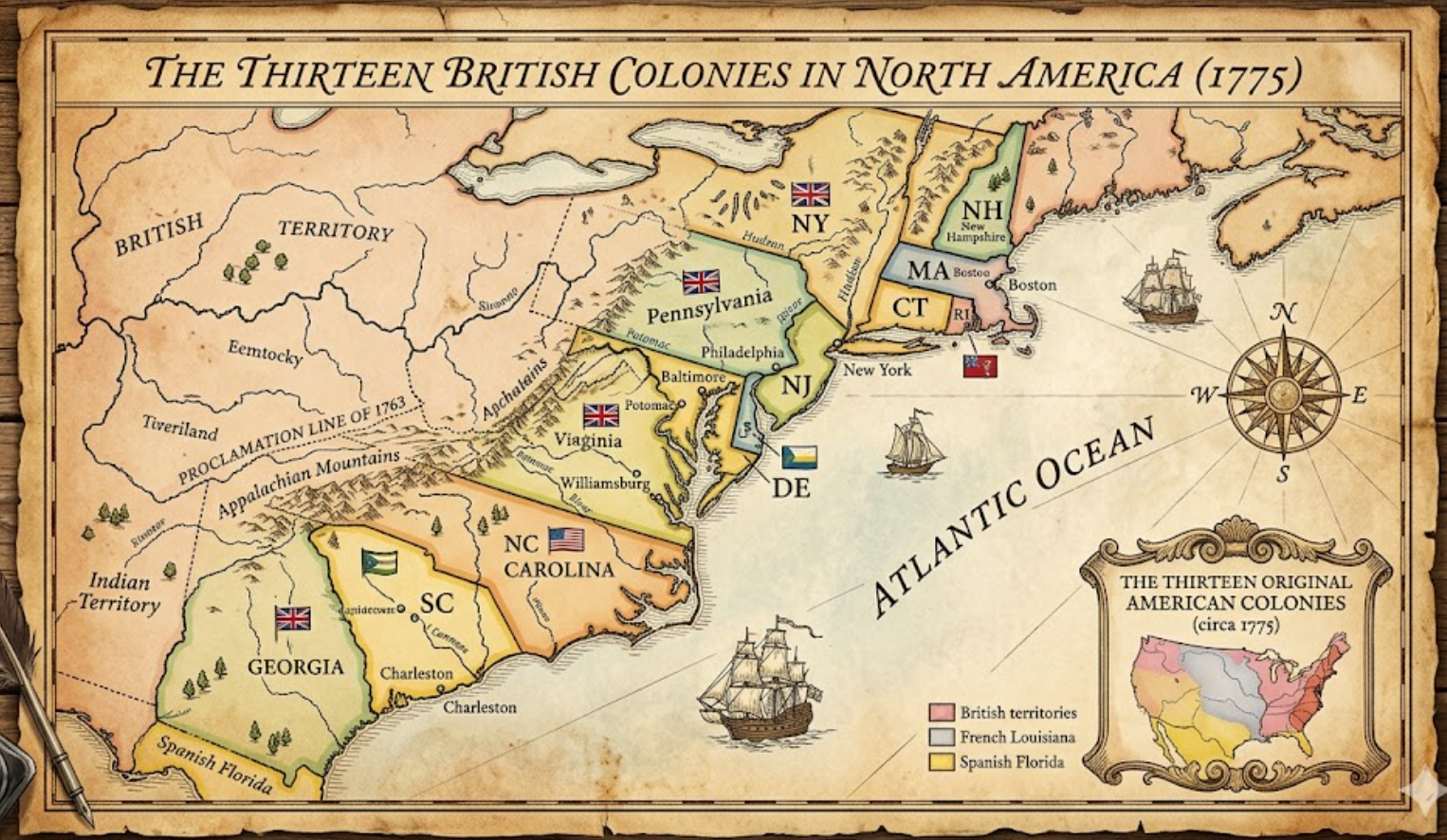
The thirteen colonies in the order they were founded — who founded them, why they were created, and when they joined the Union.
- Colony 1Virginia
Founders & purpose: Founders & Purpose: Founded by John Smith and the Virginia Company of London. The primary purpose was economic profit, specifically to find gold, establish trade routes, and eventually cultivate cash crops like tobacco.
Timeline: Timeline & Statehood: * Created: 1607 (Jamestown) • Became a State: June 25, 1788 • Order of Statehood: 10th
- Colony 2Massachusetts
Founders & purpose: Founders & Purpose: Founded by Puritans and Pilgrims (including prominent leaders like John Winthrop and William Bradford). The purpose was to escape religious persecution in England and establish a society based strictly on their religious ideals.
Timeline: Timeline & Statehood: * Created: 1620 (Plymouth) / 1630 (Massachusetts Bay Colony) • Became a State: February 6, 1788 • Order of Statehood: 6th
- Colony 3New Hampshire
Founders & purpose: Founders & Purpose: Founded by John Mason and Fernando Gorges. It was established primarily for economic reasons, specifically to capitalize on the lucrative fishing, timber, and fur trading industries in the northern region.
Timeline: Timeline & Statehood: * Created: 1623 • Became a State: June 21, 1788 (Its ratification officially legalized the U.S. Constitution) • Order of Statehood: 9th
- Colony 4Maryland
Founders & purpose: Founders & Purpose: Founded by Cecil Calvert (Lord Baltimore). The colony was created as a refuge for English Catholics who faced severe discrimination and persecution in England, establishing an early model for religious tolerance.
Timeline: Timeline & Statehood: * Created: 1632 (settled in 1634) • Became a State: April 28, 1788 • Order of Statehood: 7th
- Colony 5Connecticut
Founders & purpose: Founders & Purpose: Founded by Thomas Hooker and a group of Puritans from Massachusetts. They sought more political freedom, better access to fertile farming land, and a government independent of the strict Massachusetts Bay authorities.
Timeline: Timeline & Statehood: * Created: 1636 • Became a State: January 9, 1788 • Order of Statehood: 5th
- Colony 6Rhode Island
Founders & purpose: Founders & Purpose: Founded by Roger Williams, who was banished from Massachusetts for his radical beliefs. It was intentionally created to champion complete religious freedom, the total separation of church and state, and fair dealings with Native Americans.
Timeline: Timeline & Statehood: * Created: 1636 • Became a State: May 29, 1790 • Order of Statehood: 13th (The last of the original colonies to ratify)
- Colony 7Delaware
Founders & purpose: Founders & Purpose: Originally founded by Peter Minuit and the New Sweden Company, later taken over by the Dutch and eventually granted to William Penn. It was established to expand agricultural trade and secure a direct water route to the Atlantic Ocean for Pennsylvania.
Timeline: Timeline & Statehood: * Created: 1638 • Became a State: December 7, 1787 • Order of Statehood: 1st (Earning its nickname, "The First State")
- Colony 8North Carolina
Founders & purpose: Founders & Purpose: Founded by a group of eight English nobles known as the Lords Proprietors, who were granted the land by King Charles II. It was established for small-scale tobacco farming, trade, and regional expansion.
Timeline: Timeline & Statehood: * Created: 1653 (Originally part of a singular Carolina province, officially splitting in 1712) • Became a State: November 21, 1789 • Order of Statehood: 12th
- Colony 9South Carolina
Founders & purpose: Founders & Purpose: Also founded by the Lords Proprietors. It was organized to establish large agricultural plantations, quickly becoming highly profitable through the large-scale cultivation of rice and indigo cash crops.
Timeline: Timeline & Statehood: * Created: 1663 (Split from North Carolina in 1712) • Became a State: May 23, 1788 • Order of Statehood: 8th
- Colony 10New York
Founders & purpose: Founders & Purpose: Originally founded by the Dutch as New Netherland (1624), it was seized by the English and renamed after James, Duke of York. The purpose was to secure a crucial commercial harbor and dominate the highly lucrative Atlantic fur trade networks.
Timeline: Timeline & Statehood: * Created: 1664 • Became a State: July 26, 1788 • Order of Statehood: 11th
- Colony 11New Jersey
Founders & purpose: Founders & Purpose: Founded by Lord Berkeley and Sir George Carteret, who received the land from the Duke of York. It was established to attract settlers via promises of religious freedom, ethnic diversity, and affordable land grants for farming.
Timeline: Timeline & Statehood: * Created: 1664 • Became a State: December 18, 1787 • Order of Statehood: 3rd
- Colony 12Pennsylvania
Founders & purpose: Founders & Purpose: Founded by William Penn through a land charter from King Charles II. It was created as a safe haven for Quakers, designed as a "Holy Experiment" anchored in total religious tolerance, pacifism, and representative government.
Timeline: Timeline & Statehood: * Created: 1681 • Became a State: December 12, 1787 • Order of Statehood: 2nd
- Colony 13Georgia
Founders & purpose: Founders & Purpose: Founded by James Oglethorpe. It was uniquely established to serve two purposes: to act as a military "buffer zone" protecting the wealthy northern colonies from Spanish-controlled Florida, and to offer a fresh start for English debtors who would otherwise be imprisoned.
Timeline: Timeline & Statehood: * Created: 1732 (The youngest of the original colonies) • Became a State: January 2, 1788 • Order of Statehood: 4th
The Evolution of the American Flag
From the 1775 Grand Union Flag to today's 50-star design — each version flew over a different moment in the American story.
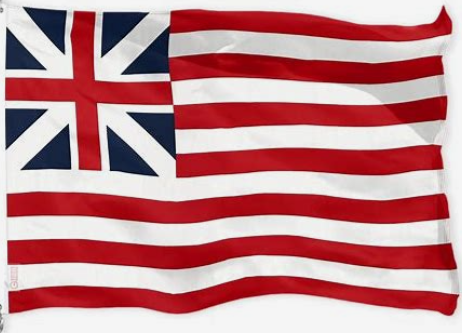 The Grand Union Flag1775
As the American Revolution began, the Continental forces needed a unified banner to represent their collective resistance. Designed before the colonies officially declared independence, it combined the British Union Jack (the "King's Colors") in the canton to show ongoing loyalty to British law, while using 13 alternating red and white stripes to represent the unity of the 13 colonies fighting for their rights.
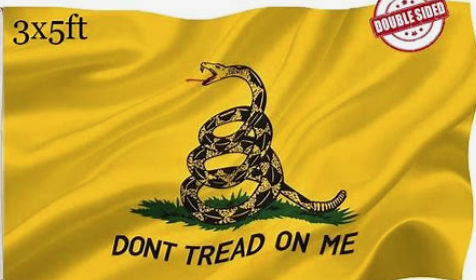 The Gadsden Flag ("Don't Tread on Me")1775–1776 (Gained widespread prominence in 1777)
Designed by American statesman and general Christopher Gadsden during the onset of the American Revolution, this flag was created to serve as a fierce warning to Great Britain. The timber rattlesnake was chosen because it was native only to America and was known to never initiate an attack, but once provoked, it would strike with deadly precision. The 13 rattles on the snake's tail symbolized the unbreakable unity of the thirteen colonies. It was proudly flown by the Continental Marines and early American naval vessels as a bold, unmistakable symbol of American defiance, individualism, and the defense of personal liberty against tyranny.
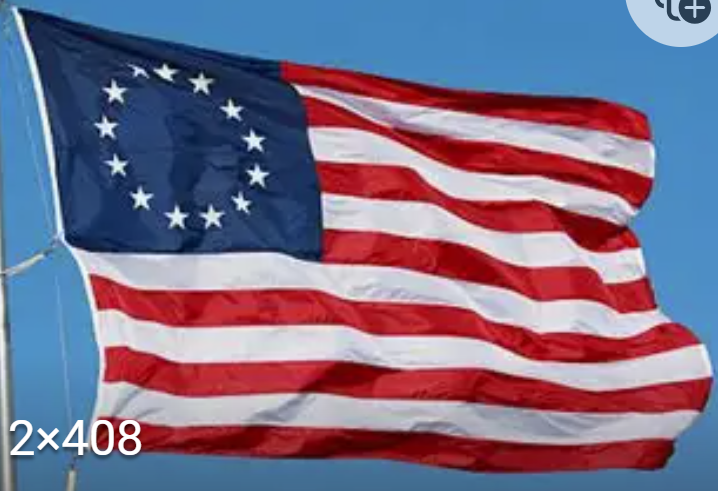 The Betsy Ross Flag (The First Official United States Flag)1777
Following the Declaration of Independence, the Second Continental Congress passed the Flag Act of 1777 to establish an entirely sovereign national symbol. The act declared that the flag have 13 stripes and 13 white stars on a blue field, representing a "new constellation." Arranging the stars in a continuous circle signified that no single colony or state held precedence over another, symbolizing perfect equality in the new Union.
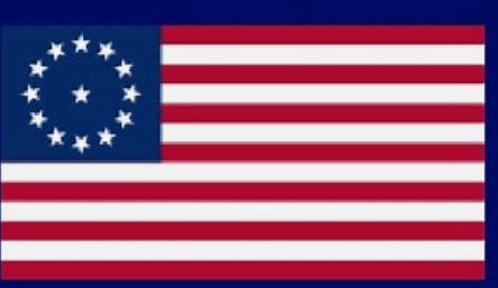 The Cowpens Flag1781
This variant of the national flag was carried into battle during the Revolutionary War, most famously by the Third Maryland Regiment at the Battle of Cowpens. Its design rearranged the 13 stars to feature 12 stars in a circle surrounding a dominant 13th star in the center, creating a distinct battle standard that helped soldiers identify their regiment amidst the smoke of combat.
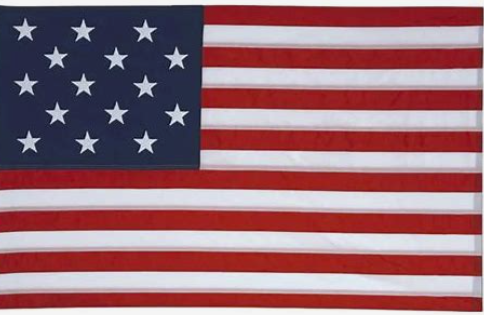 The Star-Spangled Banner (The 15-Star Flag)1795
After Vermont (1791) and Kentucky (1792) joined the Union, Congress passed the Flag Act of 1794 to update the national symbol. This version holds a unique place in history because it is the only official American flag to feature 15 stripes alongside its 15 stars. It flew over Fort McHenry during the War of 1812, directly inspiring Francis Scott Key to write the lyrics that became the U.S. National Anthem.
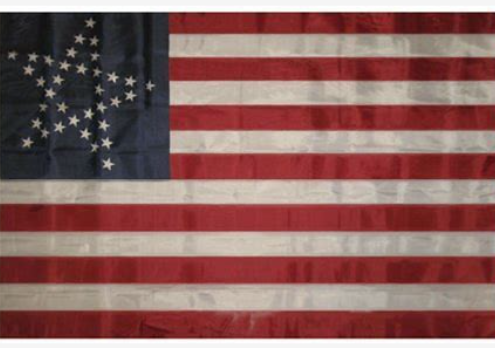 The Great Star Flag (The 20-Star Flag)1818
By 1818, five more states had joined the Union. Realizing that adding a new stripe for every state would make the flag look cluttered, Congress passed the Flag Act of 1818. This act permanently returned the flag's design to the original 13 stripes to honor the founding colonies, while mandating that a new star be added for every new state on the 4th of July following its admission. Navy Captain Samuel Reid famously arranged the 20 stars into the shape of one giant star, creating a visually striking pattern for maritime and military identification.
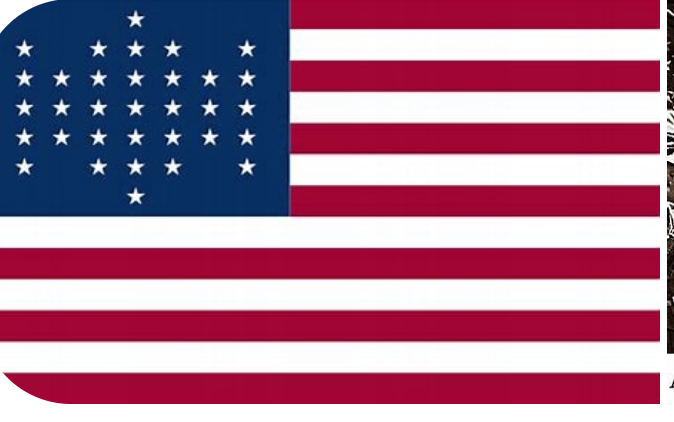 The Civil War Flag (The 33-Star to 35-Star Flags)1861 (33-Star) / 1863 (35-Star)
Introduced at the onset of the American Civil War, this flag was updated to include Kansas (34th star) and later West Virginia (35th star). Crucially, President Abraham Lincoln explicitly refused to remove any stars representing the Southern seceding states from the national banner. He maintained that secession was legally impossible and that the stars must remain united on the flag to reinforce his political objective: preserving the entire, unbroken constitutional republic.
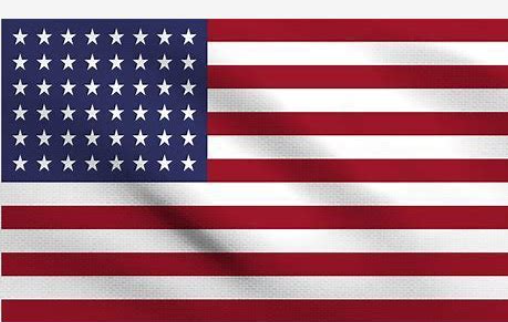 The 48-Star Flag1912
Following the admission of New Mexico and Arizona, President William Howard Taft issued an executive order to standardize the flag's proportions and star arrangement. Prior to this, manufacturers used varying star layouts. This flag flew for 47 years—spanning both World War I and World War II—making it the second-longest-serving flag design in American history and symbolizing the nation's emergence as a global superpower.
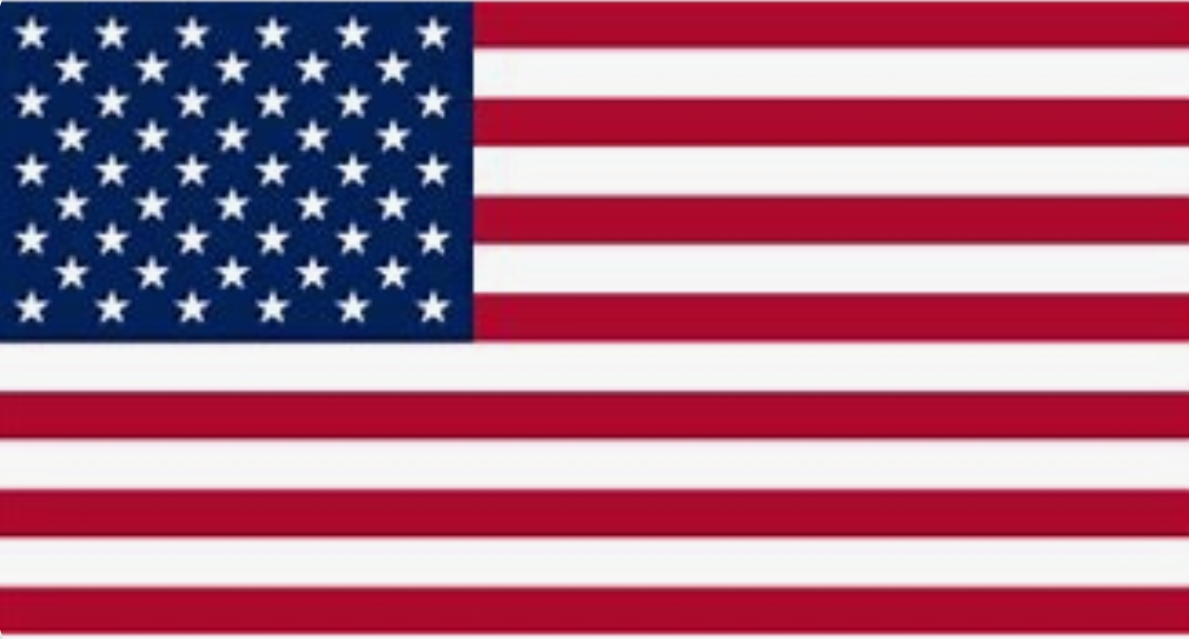 The Modern 50-Star Flag1960
This current flag was introduced following the admission of Alaska and Hawaii to the Union. Designed by a 17-year-old high school student named Robert G. Heft for a class project, the 50 stars are arranged in alternating rows of six and five. Officially unfurled by President Dwight D. Eisenhower, it stands today as the longest-running flag design in the nation's history, symbolizing a fully matured continental and Pacific union.
Get to Know Your States
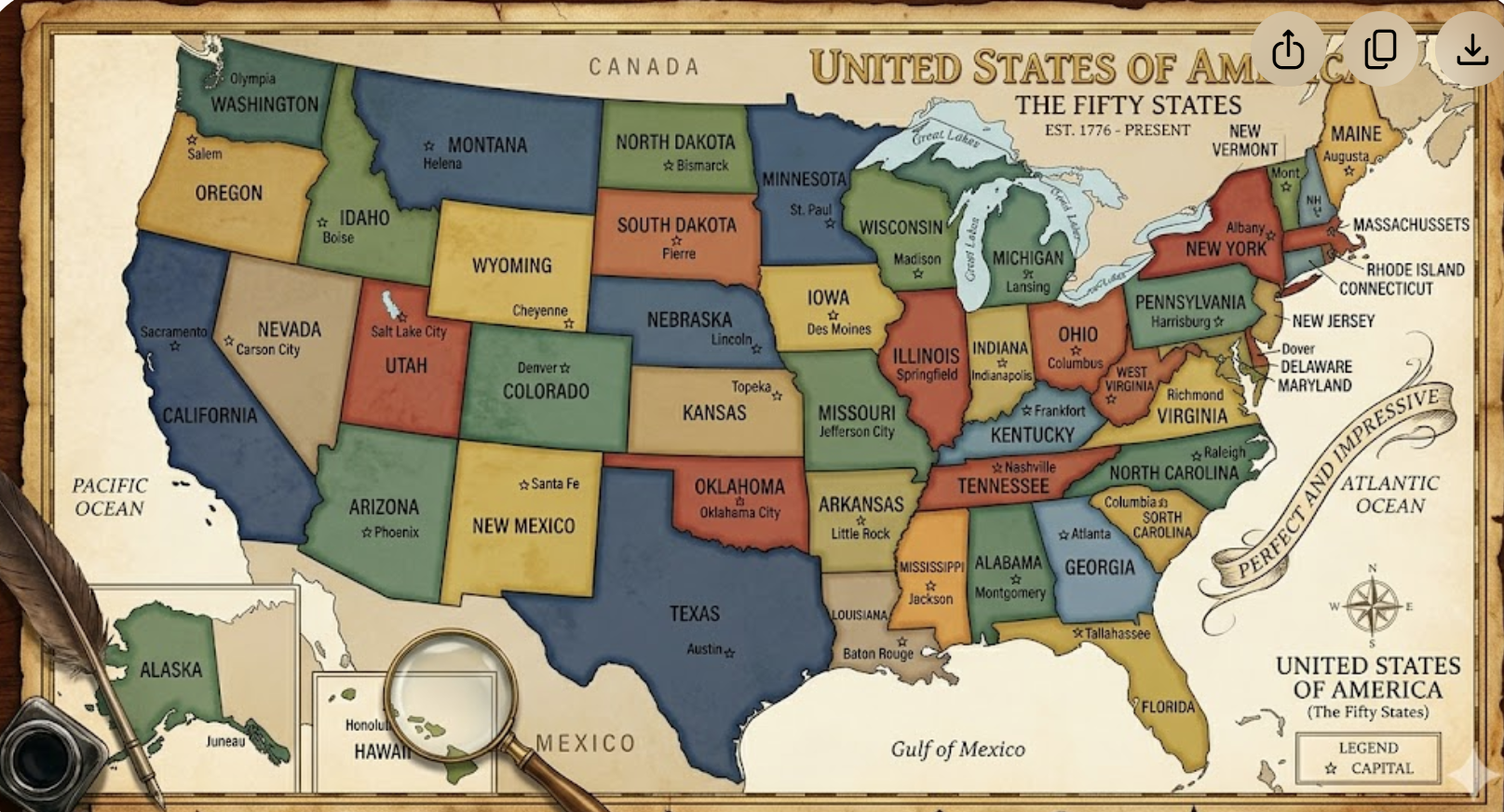
A bonus 50-state quiz designed for the younger reader — and a fun refresher for everyone else. Each question gives four statements about a state; three are true and one is false.
Take the State Quiz →A note from the author
There is a great deal of information here, and there may be some errors. Please accept my apologies in advance — and if you spot something, write me at Mikewalden50@icloud.com with "feedback" in the subject line.